Oct 25, 2026Guides
Key Box Tags: Fitting Key Tags to a Key Cabinet
By TAGEX · Published October 25, 2026 · Updated October 31, 2026
How to choose key tags that actually fit a wall key cabinet: hook spacing, tag size, label windows, color zones and barcode options for key control.
This article explains why keys stored in a wall key box or key cabinet become untraceable, which tag shapes actually fit a hanging hook, and what to specify before ordering tags for a key control board. After reading, you can choose the right tag for your cabinet and set up a key box that any staff member can read at a glance.
Why a Key Box Needs Tags at All
A key box solves storage. It does not solve identification. Once twenty or fifty keys hang in the same cabinet, the physical key is no longer enough information — staff need to know which door, which vehicle, which unit or which equipment each key belongs to, and who took it. Without a readable tag, every retrieval becomes a search, and every return becomes a guess.
The tag is what turns a box of keys into a key control system.
What Makes a Tag Work in a Key Box?
A hanging key box imposes three physical limits that a normal product photo never shows. First, hook spacing: a tag that is too wide overlaps the next hook or blocks the cabinet door. Second, ring size: the tag has to sit flat against the board rather than swing forward. Third, writing space: the visible part of the tag must still carry enough characters to identify the key.
Tags that are designed for a key ring and tags that are designed for a cabinet hook are not always the same thing. When you specify, describe the cabinet, not just the key.
Which Sizes Fit a Key Cabinet?
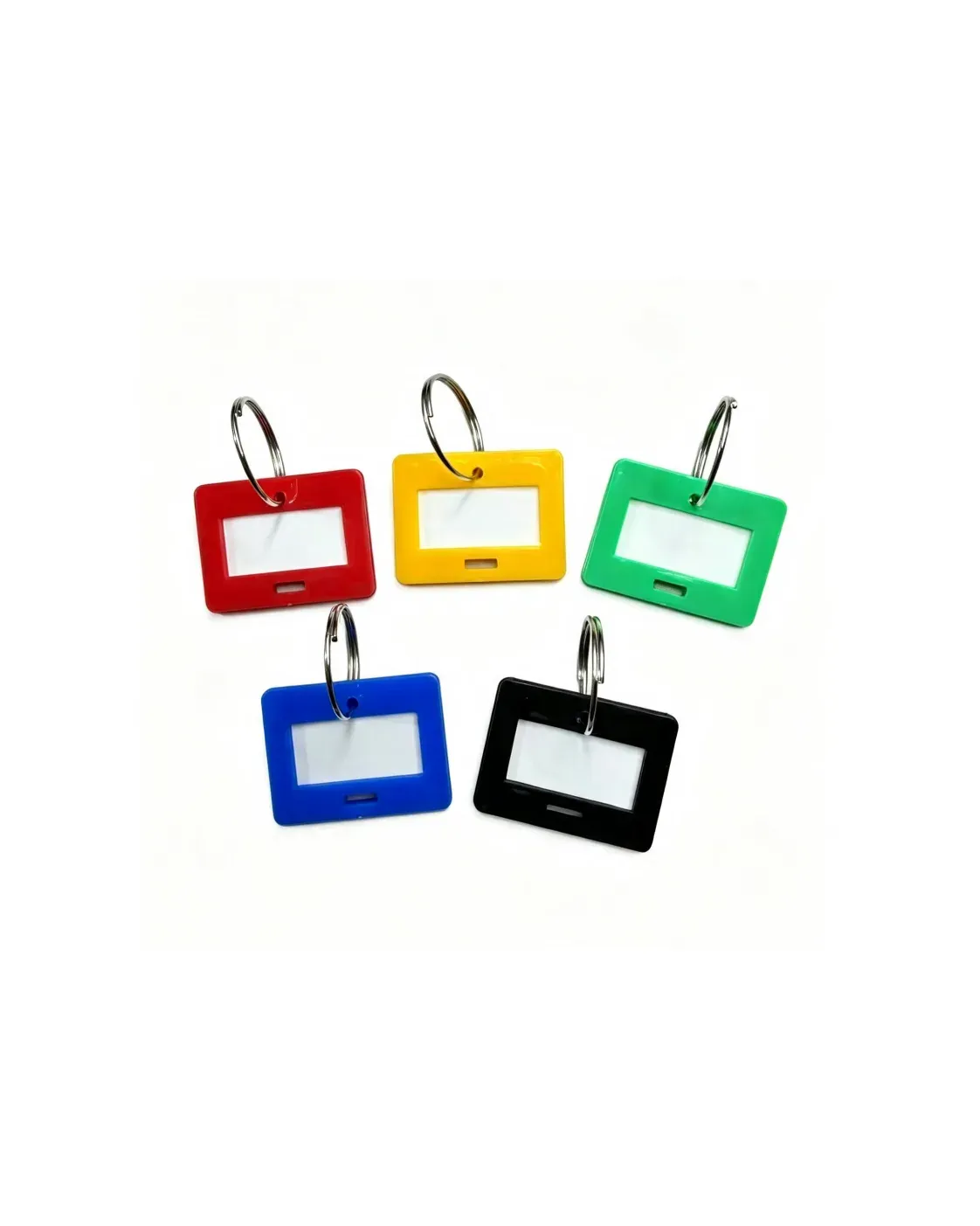
For a wall cabinet with standard hooks, the two sizes that usually work best are the 1.1 × 0.9 inch compact tag and the 1.9 × 1.0 inch mid-size tag. The compact size keeps hooks from crowding when a cabinet holds many keys. The 1.9 × 1.0 size leaves room for a plate number, a room number or a short reference.
Where the cabinet has generous spacing, the 2.2 × 1.1 inch tag gives enough surface for a plate plus a work order reference. The 3.3 × 2.0 inch size is generally too large for dense key boards and is better suited to loaner keys or equipment bags.
Label Window or Open Tag?
A label window protects a paper insert behind clear plastic, so the writing survives handling and stays readable after months in a cabinet. An open tag requires marker or printed labels directly on the surface, which fades and smudges in workshops and vehicles.
For any cabinet that is touched daily, the label window is the practical choice: the insert can be replaced when a key is reassigned, without replacing the tag.
How Many Colors Does a Key Cabinet Need?
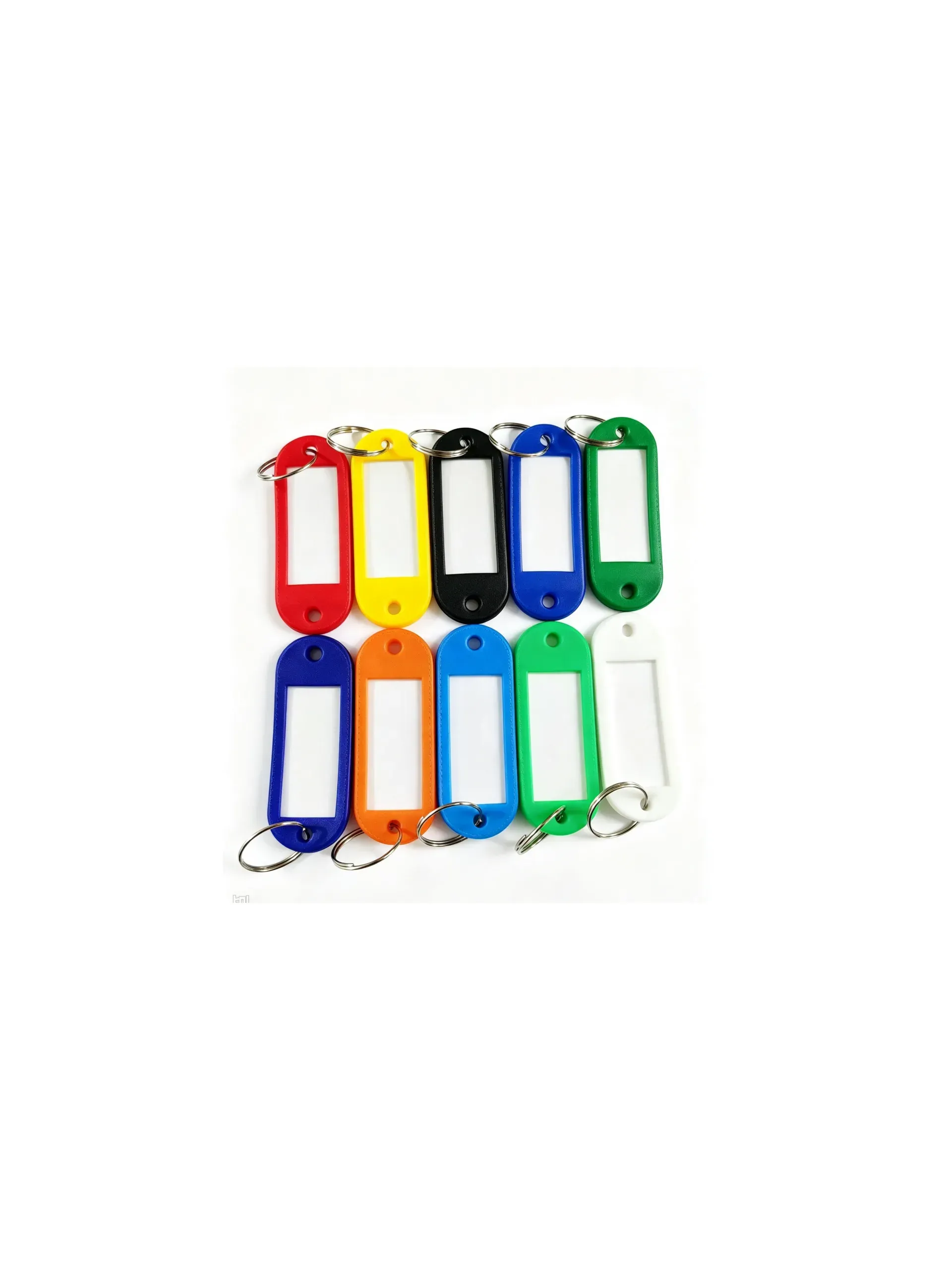
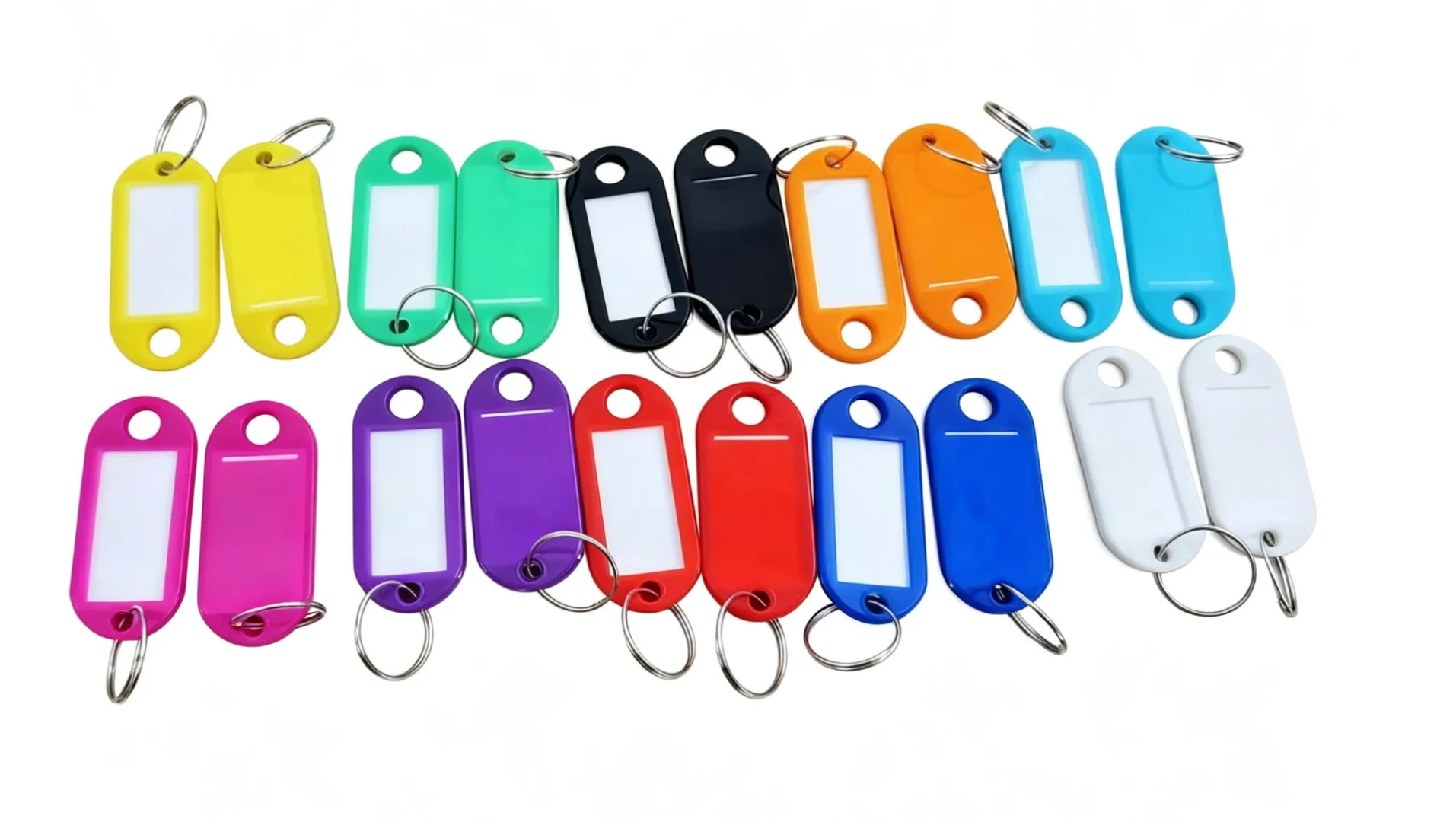
Color is the fastest way to group keys in a cabinet, because staff can scan by color before reading any label. A common approach is one color per building, per floor, per department or per key type. Our key tags are stocked in 10+ colorways per model, so a cabinet can be divided into color zones without a custom color run.
Color handles the group. The label handles the individual key. Both are needed once a cabinet holds more than a handful of keys.
Should Key Cabinet Tags Be Barcoded?
Barcoded key tags let a cabinet be logged electronically: scan the tag at check-out and check-in, and the record is automatic. This is common in facilities that track hundreds of keys, and it requires the tag surface to stay flat and clean enough to scan. A clear label window with a printed insert is the usual base for this, because the barcode can be reprinted when a key changes.
What to Specify Before Ordering for a Key Box
Send the cabinet type and hook spacing, the number of keys it holds, the writing you need on each tag, and the color grouping you want. If the keys will be logged electronically, say so, because that changes the insert and surface requirements.
Pricing, minimum order quantity, certification requirements and lead time all depend on your customization requirements, so send your specification and our team will quote against it.
Summary
A key box stores keys; tags make them findable. Choose a size that fits your hook spacing, choose a label window if the keys are handled daily, and use color to divide the cabinet into zones — then the box works without anyone asking where a key belongs.
Browse our plastic key tags with labels for key cabinets, or our mini window key tags for crowded boards. Send your hook spacing and key count for a quote.