Oct 25, 2026Guides
Auto Shop Key Tags: A Key Control System That Works
By TAGEX · Published October 25, 2026 · Updated October 31, 2026
How auto repair shops and dealerships stop losing customer keys with color-coded key tags, label windows and a simple check-in and check-out system.
This article explains why auto repair shops and dealerships lose customer keys, how a color-coded key tag system prevents it, and what to specify before ordering tags in bulk. After reading, you can set up a key control system for your service drive in one afternoon and brief a supplier in one message.
Why Auto Shops Lose Customer Keys
A repair shop receives dozens of vehicles a day. Each key arrives on a customer fob, gets handed to a service advisor, passed to a technician, moved to a parts runner, then returned at pickup. Every handoff is a chance for the key to be separated from the vehicle it belongs to. When that happens, the shop stops working on that car, the customer waits, and someone spends an hour matching loose keys to vehicles in the lot.
The problem is rarely theft. It is traceability — nobody can tell at a glance which key belongs to which car, or who last held it.
How Do Color-Coded Key Tags Fix This?
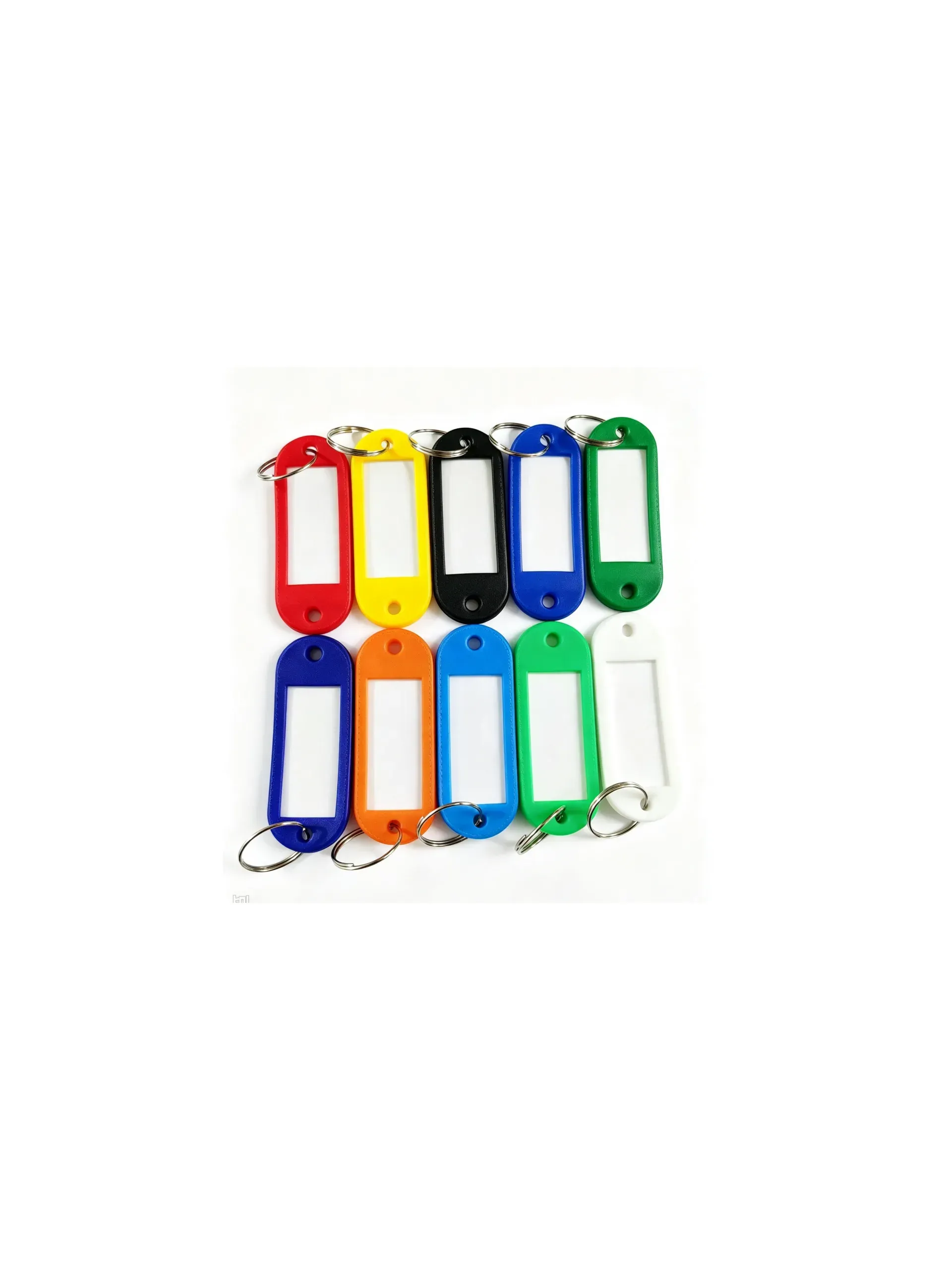
Assign one color per vehicle status rather than per vehicle. A common scheme: blue for checked in and waiting for diagnosis, yellow for waiting for parts, red for work in progress in the service bay, green for work complete and ready for pickup, and white for waiting for customer approval.
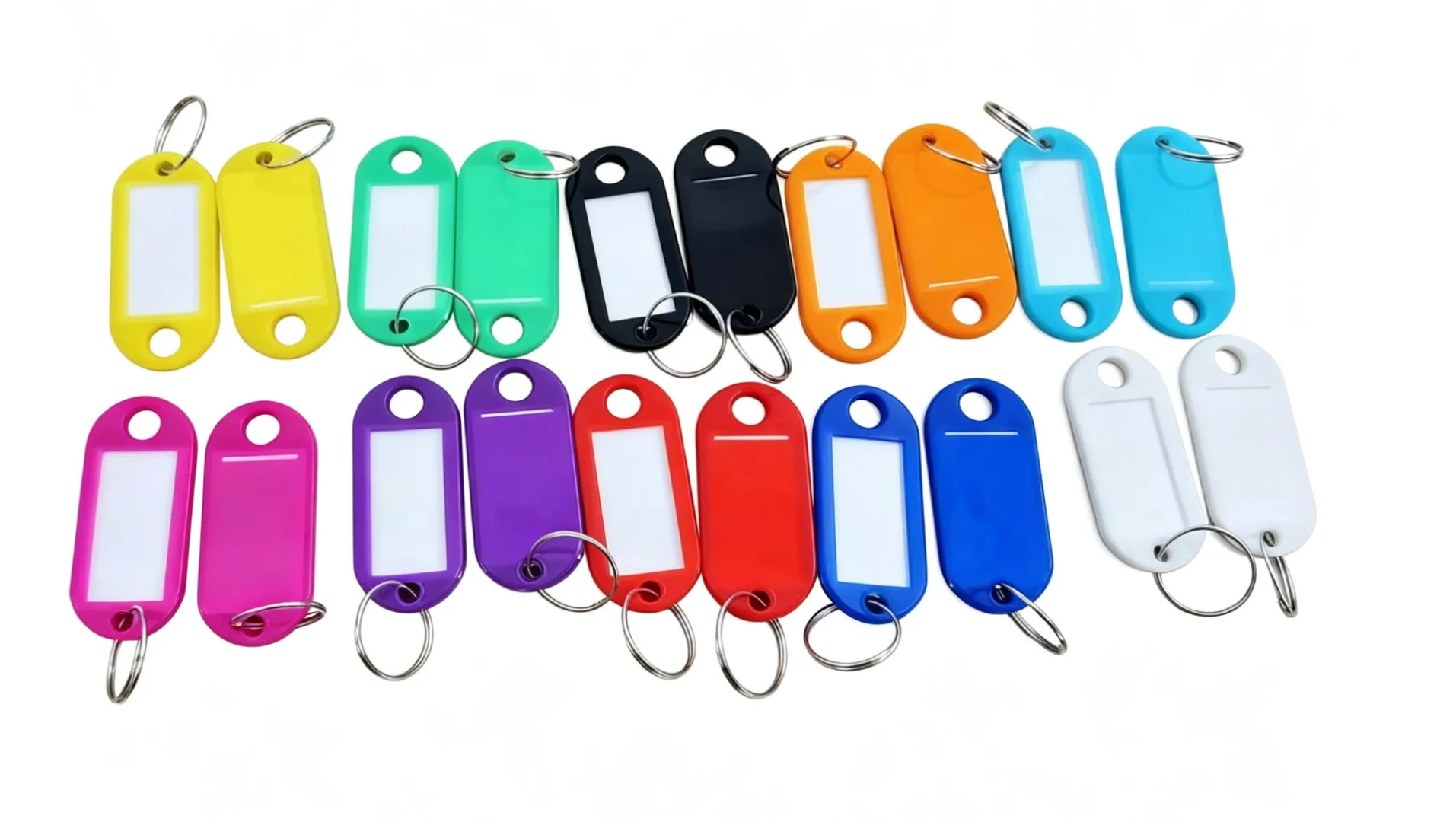
With that scheme, a service manager can scan the key board and know the state of every car without opening a work order. Our key tags are stocked in 10+ colorways per model, so a shop can build a status palette without paying for a custom color run.
Status color tells you where a car is. It does not tell you which car. That is what the label window is for.
What Information Belongs on a Shop Key Tag?
Four fields cover most service-drive needs, written on a replaceable paper insert behind a clear window: license plate or stock number, last six digits of the VIN, work order or RO number, and technician initials or bay number.
A clear label window keeps those details legible even when the tag has been handled with oily hands, and the insert can be swapped when a vehicle is re-tagged. For dealerships, the stock number is usually enough; for independent shops, the plate plus RO number is faster for technicians.
Which Tag Fits a Service Drive?
Tag size matters more than most buyers expect. A tag that is too large will not hang cleanly on a crowded key board; a tag too small leaves no room to write. The 1.1 × 0.9 inch size suits motorcycles, small equipment and crowded boards. The 1.9 × 1.0 inch size is the common middle size that fits a plate number plus a short reference. The 2.2 × 1.1 inch size leaves room for plate, RO number and initials on one insert. The 3.3 × 2.0 inch size is a large luggage-style tag used for loaner car keys and vehicle document bags.
For most service drives, the 1.9 × 1.0 and 2.2 × 1.1 sizes cover the majority of keys, with a small stock of compact tags for specialty vehicles.
Label Window or Flip Cover for a Repair Shop?
A label window is open and fast to read, which suits a key board where staff need to scan quickly. A flip cover protects the insert from grime and handling, which suits tags that travel with the vehicle or sit in a technician pocket. Shops with heavy workshop conditions often run both: label windows on the board, flip covers on keys that leave the building.
Why Cheap Tags Cost More in a Shop
A tag that snaps at the ring leaves a key unidentified, which is exactly the failure the system was built to prevent. Shop keys are handled many times a day and dropped into drawers and boxes; regrind plastic turns brittle at the hole and cracks. Every TAGEX key tag is produced from 100% virgin resin, which holds its flexibility through that handling, and we send free samples on WhatsApp so a shop can bend-test a tag before committing to a bulk order.
How to Set Up the System
Pick four to six status colors and write the scheme on a card at the service drive. Stock the corresponding tags and a supply of blank inserts. At check-in, write the plate, VIN and RO number on an insert and hang the tag. Move the tag to the next status color as the vehicle progresses. At pickup, remove the insert and return the tag to stock.
The whole setup takes an afternoon. The value is that any staff member can read the board without asking anyone.
What to Specify Before You Order
Send your vehicle volume per day, the status colors you need, the sizes that match your key board, and whether you want your shop name or logo printed on the tag. Custom logo printing and custom packaging can both be arranged with the order. Ready-stock colors support fast bulk supply, so a shop can start with a basic palette and add colors later.
Pricing, minimum order quantity, certification requirements and lead time all depend on your customization requirements, so send your specification and our team will quote against it.
Summary
Key loss in a repair shop is a labeling problem, not a security problem. A status color scheme, a readable label window and a tag that survives daily handling solve most of it — and the setup costs one afternoon.
Browse our plastic key tags with labels for service-drive boards, or our flip cover key tags. Send your daily volume and color plan for a quote.